Sunday, May 19, 2013
Flarecorn!
“This is really good. What’s in it? Pickles?”
“I couldn’t have another bowlful, I already ate three.”
“I need some more. The wind blew mine away.”
As it turns out, seasoned popcorn is the perfect festival food. It is easy to make lots, or to make fresh batches here and there all day. Everyone likes it. And the smell of popping corn puts people in a party mood.
I adapted this recipe especially for Art Flare Northeast, which went down in my friend Betsy’s backyard this weekend. If you didn’t make it out there, you should definitely watch this space. Will Art Flare return next year? And will they be serving Flarecorn?
Flarecorn
I made a tenfold batch, then kept the butter warm all day in a baby crockpot and popped the corn as we needed it. The recipe is adapted from Rebar Modern Food Cookbook, which wants you to use Chimayo chile powder. I a) do not have any of that and b) would not make it to serve to random Minnesotan strangers. Oh yah, 6000 Scoville yoonits is kinda hot fer us, don’cha know!
Serves 4-6.
½ stick butter
2 cloves garlic, minced
2 t Hungarian paprika
2 t rubbed sage
Pinch cayenne
½ t salt
½ c popcorn
Melt the butter in a small saucepan over medium-low heat. Toss in the garlic and simmer for a few minutes. Add the spices and simmer for a minute more. Scrape the butter and spices into a big not-plastic popcorn bowl. (Plastic will stain, and plastic + hot fat = bad news.)
Pop the popcorn right into the bowl if you still have one of those old-school air poppers. Take a rubber scraper and toss the popcorn around in the butter, scraping up the butter and seasoning from the bottom, as if you were folding cake batter.
Serve it when everything is about as evenly coated as you can get it.
Sunday, June 10, 2012
Lasagna Is Not an Appropriate Summer Dish
“Why are you making lasagna when it’s 9 billion degrees outside?” tweeted @amycrea, a tweeple who has become an IRL friend. (And who ought to know better than to ask.)
Why? Why?? What do you mean, “why?”
- I got a new blue Le Creuset earthenware pan for my birthday! Yay! Now I’m feeling adventurous!
- I read an article about lasagna on Slate.com in a series called “You’re Doing It Wrong.” Nothing pisses me off more than being told by Internet hipsters that I’m doing something wrong. Plus, for someone who’s telling everyone they’re doing it wrong, the author holds a rather shallow understanding of what makes a good tomato sauce. Rrr! Now I’m feeling vindictive!
- I have promised to bring dinner to my friends Deb and Sean, who are new parents. Now I’m feeling all protective.
Ridiculous, Ridiculous, Ridiculous
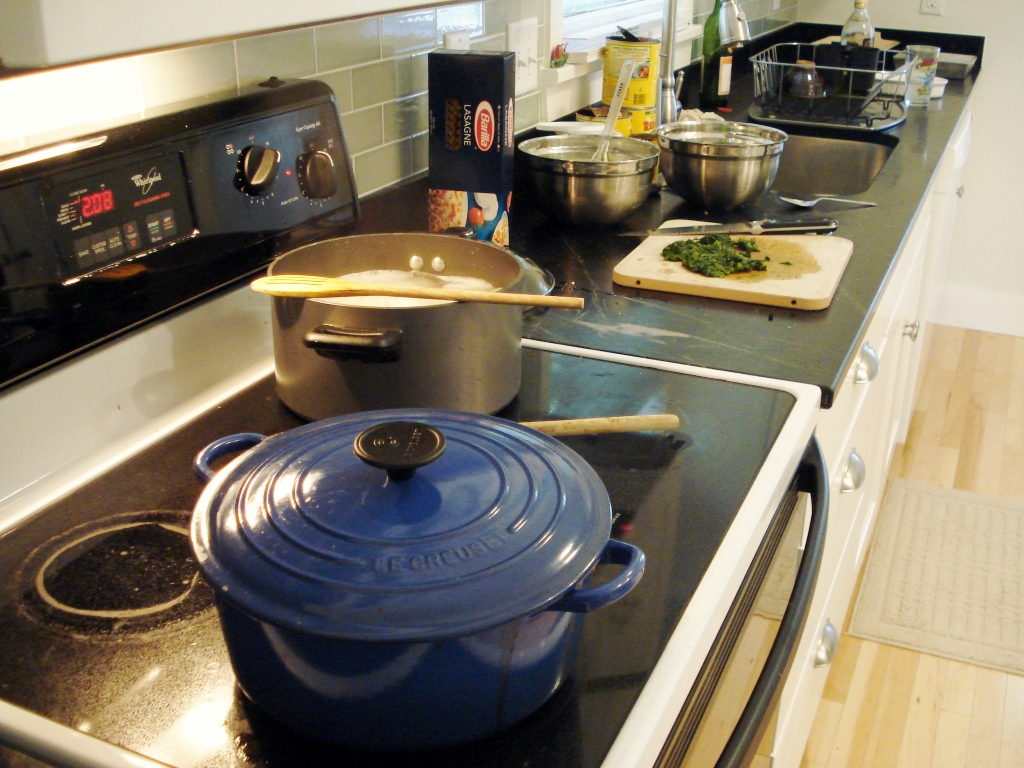
I followed Slate’s suggestion and made mushroom lasagna, except they don’t know what they’re doing so I fixed their recipe. They ARE right, however, about ingredients: get the best stuff you can find. There are three parts to the recipe: sauce, cheese filling, and assembly.
| The ingredients PLUS a beadwork snail |
1 onion, chopped
½ head garlic, chopped
½ to 1 lb mushrooms, chopped
1-2 sage leaves 1 t dried rosemary
3 cans crushed tomatoes
1 can tomato paste
1 cup wine
1 big sprig basil, leaves plucked and torn
Salt and pepper to taste
| I overfilled ol' Bluie again. Relax, though, it's a double recipe |
Cheese Filling
1 lb fresh spinach
1 lb ricotta cheese
8 oz shredded parmesan, pecorino, asiago, or other dry aged Italian cheese. Hey, shut up. No jokes about my grandma!
1 egg
A dash of freshly grated nutmeg
Salt and pepper to taste
Wash and steam the spinach. Drain it, turn it out onto a cutting board, and chop it. When it is cool enough, squeeze as much water out of it as you can.
Whisk the egg in a medium bowl. Dump in everything else and blend.
| Giant mess |
1 lb lasagna noodles
Olive oil
1 lb mozzarella cheese (fresh or shredded, either is fine.)
Cook the noodles according to the package – I’d throw several tablespoons of salt into four or five quarts of water and boil them in that. Pull them out of the water and drain them, then toss them with a little olive oil to keep them from getting sticky.
Preheat the oven to 375°. (On this, Slate and I agree.) Grease your big old lasagna pan with olive oil, then coat the bottom with sauce. Put down a layer of noodles. Then spread another layer of sauce; drop half the cheese filling in little blobs all over the sauce and smooth it out into a layer as best you can. Put noodles atop this. Do sauce, cheese filling, noodles again. Top with a thin layer of sauce and then cover it up with mozzarella.
| Just-a like-a that. |
Sunday, November 28, 2010
Zucca Due Colori
It’s that time of year again. Sparklemas is on its way, and I’m experimenting with what we should have for dinner. Last year I made a giant porchetta and pumpkin ravioli. This year, I want to mix it up a little. I like the flavors of squash and sage, but I don’t want to paint myself into the corner of making labor-intensive ravioli every year.
I tried a pan-fried squash dish and served it over gnocchi. Gnocchi are a favorite of mine: pillowy little dumplings of potato and flour, chewy and surprisingly filing. They’re comfort food and just the thing for me on a deep, dark winter night.
Problem, though: the softness and blandness of the gnocchi do not make much of a contrast for the squash. And, as it turns out, not everyone likes their texture. (Cough. Beth. Ahem.) I felt the sweetness of the dish needed a little something… perhaps a splash of balsamico.
Overall, I’d call the squash a win as a side dish. The squash is sumptuous and sweet; the savor of onions, garlic, and sage complement it well.
Zucca Due Colori
That is, two-color squash. Butternut and Festival are what I happened to have in the fridge. Who knew they were going to look so pretty together?
1 butternut squash (orange flesh), peeled, seeded, and cubed
1 Festival squash (yellow flesh), peeled, seeded, and cubed
1 onion, diced
3 cloves of garlic, roughly chopped
12 dried sage leaves
3 T butter
Salt and pepper
A pound of cooked pasta, if you want
A fistful of Italian parsley, chopped
A sprinkling of grated Parmesan
Heat the butter in a large sauté pan and fry the onion until it is translucent. Toss the garlic and sage in after it and fry a minute more until they start to give off scent.
Throw in the squash cubes. They should fit in one layer; if they are too crowded, you may need to do this part in two shifts. Stir and toss the squash constantly until they start showing sear marks. If your pan is getting too sticky, throw in a tablespoon or two of water to release the caramely bits and keep things moving.
When the squash shows evidence of browning, add a quarter cup of water to the pan, turn down the heat, and cover. Let the squash cook until soft, ten or fifteen minutes. You should start the pasta during this time if you are going to serve the squash on top of it.
Turn the squash into a serving bowl, deglaze the pan with a little more water, and pour all the browned delicious bits over the squash. Toss with pasta if you are going that route. Sprinkle the bowl, or each serving, with the parsley and cheese. A splash of balsamic vinegar might brighten things up, too.
Mangiamo!
Sunday, February 28, 2010
Beans and Sausage Belong in Soup
Honestly, you guys, I don’t set out to cook cauldrons full of undifferentiated glop. This cauldronful is COMPLETELY DIFFERENT from the vat of stuff I made last post. This is bean soup, a magic soup full of protein and fiber and flavor. It will fill you up on a cold night. It will make your house smell so good.
Beth and I invented this soup because we wanted to make dinner for some friends. But we did NOT want to spend the last hour fussing in the kitchen while the friends stood about awkwardly, wondering if they should offer to help. The beauty of this soup is that it is easy to make. The secret of its deliciousness is in patience, not effort. Give it enough time on the stove for the vegetables to soften and melt a bit. The mellow bean flavor is punched up with sage and sausage*. Kale adds bright color as well as vitamins and minerals.
Add a salad and some good bread, and you’re done.
White Bean, Kale and Sausage Soup
Serves 6-8
Dry beans are more planning and monkey business than canned beans. Of course, they are correspondingly more delicious. You can soak and cook some extras, then pop them in the freezer to cut down your prep time for a future soup.
1 lb white beans: cannellini, great northern, or navy
2 bay leaves
4 peppercorns
3 carrots, chopped
1 onion, chopped
2 cloves garlic
8-12 oz sausage*: sweet Italian, hot Italian, andouille, chorizo; anything with garlic and/or chile
1 bunch kale, roughly chopped
4-6 leaves of sage
Salt to taste
*If you are a vegetarian, then instead of sausage, get some olive oil, a chopped bulb of fennel, some cayenne, and some chopped parsley.
Soak the beans overnight.
The next day, put the beans and their soaking water in a soup pot. DO NOT discard the cooking water. All the deliciousness is in it. I don’t care what your mom said about how throwing out the water will reduce bean gas. It won’t. It will only reduce my regard for you. Don’t you step to me.
Ahem. Make sure there is enough water to cover the beans. Add the bay leaves and the peppercorns. Bring them to a boil, then simmer them until they are tender.
Keep a kettle of water on the stove while you cook beans. If they need more water, bring the kettle to a boil. Adding cold water to beans makes their skins tough. Passive-aggressive little sulkers, aren’t they?
Toss the carrots, onion, and garlic cloves in the pot. Keep simmering until these soften. The garlic should break down. You can stir this into the broth, which by now should be getting thick and creamy as the beans break down, too.
About an hour before you plan to serve the soup, add the sage.
Meanwhile, brown the sausage. Or heat the olive oil and saute the fennel bulb, adding the cayenne for the last few minutes. Put the frying pan contents in the soup, reserving the cooking fat.
Sauté the kale, then pour a half cup of water in the pan and cover it tightly. Turn the heat down and steam until the kale is tender, maybe 20 to 30 minutes. (Keep an eye on it so the pan doesn’t get too dry.) Stir the kale into the pot. If you have parsley, sprinkle it on top of each bowl of soup.
Mangiamo!
Sunday, December 20, 2009
Ravioli pa' Natale
According to Mom, her nonna—my great-grandmother—spent hours and hours making ravioli for Christmas each year. They truly are a labor of love: between preparing the filling, making the pasta, rolling and assembling the ravioli, and making their sauce, it's like you've made the meal four or five times. When the food passes so many times through the hands of the cook, it cannot help but absorb what's in the heart of the cook.
And in my heart, there's joy to see the ravioli spring into the world out of nothing but flour, egg, pumpkin, and cheese. There's the warm companionship of cooking with my partner, Beth. There's a sense of connection with the women in my family, whose hands have also kneaded dough, rolled it thin, doled out filling, and set trim little pasta shapes on a floured towel to dry. And there's the anticipation of delight when, on Christmas Day, people we love will take pleasure and nourishment from the food we're making.
Ravioli di Zucca pa' Natale
That is to say, pumpkin ravioli for Christmas. This is my recipe, not Nonna's, but I hope she'd be proud. You can make the filling ahead of time and freeze it. You can also freeze the ravioli.
This recipe will make perhaps 80 or so ravioli. For a side dish, plan on 6 per person. For a main dish, plan on 9 to 12 per person.
The filling:
A pumpkin, 3-4 lb.
½ lb. grated Parmesan
Salt and black pepper to taste
The pasta:
5 c semolina flour (any other kind will work)
5 eggs
A tablespoon or two of olive oil
The sauce:
For every 6 ravioli you plan to serve,
1 T butter
2-3 sage leaves, fresh or dried
1-2 baby spinach leaves
1 T shaved Parmesan cheese
Ground black pepper
Peel the pumpkin, cut the flesh into small pieces, and mash it. Mix it with the Parmesan and seasonings to taste.
On a wooden cutting board or directly on your work surface, make a mountain of the flour. Make a volcano crater in it with your fist. Crack the eggs into the crater and add a splash of olive oil.
Set a pot of salted water on the stove to boil. Heat the butter in a skillet or saucepan. Gently sauté the sage leaves until they are crispy; break them up in the butter a little. Sliver the spinach leaves.
Cook the ravioli. If they are fresh, this will take less than five minutes. If they are frozen, just drop them right in the boiling water without thawing.
Drain them well and arrange them on a plate. Drizzle them with the sage butter, sprinkle with shaved parmesan, and toss on a smattering of the spinach slivers. Finish with a grind or three of fresh black pepper.
Buon Natale, mios amicos.